Request an Appointment
 Download Patient Forms
 Patient Login
 Get Directions to Our Office
 Sleep Rehab

Do You Always Need a Bone Graft Before Dental Implants?
August 17, 2026
If you’re considering replacing a missing tooth, you’ve probably come across the term “bone graft” and wondered whether it applies to you. It’s a common assumption that every implant patient has to go through this extra step, but that’s not actually true. Whether a bone graft is necessary depends entirely on your own jawbone, and the only way to know for sure is through a proper evaluation. At Rowlett Dental Associates, this is a question our team answers for patients regularly, and the honest answer is: it depends.
Why Bone Grafting Comes Up in the First Place
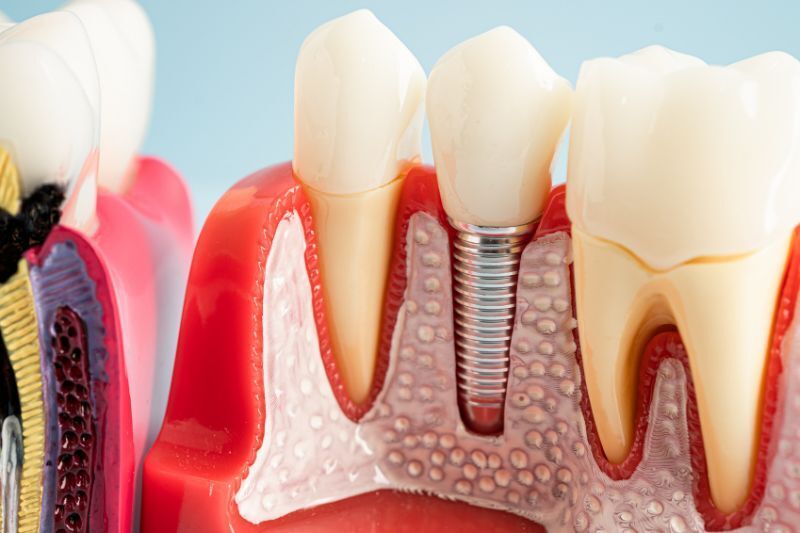
A dental implant relies on the jawbone for support, much like a natural tooth root does. When a tooth has been missing for a while, especially for months or years, the bone in that spot can begin to shrink from lack of stimulation. Gum disease, old dentures, and injury can also reduce bone volume over time. If there isn’t enough bone left to properly anchor an implant, a bone graft can rebuild that foundation before the implant is placed.
When a Bone Graft Isn’t Necessary
Plenty of patients have more than enough healthy bone to move straight into the dental implant procedure without any extra prep work. This is especially true for people who:
- Lost a tooth relatively recently and haven’t experienced much bone loss yet
- Have generally strong, dense jawbone in the area being treated
- Are having a tooth extracted and an implant placed around the same time, since immediate placement can sometimes reduce bone loss
- Are good candidates for smaller-diameter or specially angled implants that require less bone volume
When a Bone Graft Is Usually Recommended
- Significant bone loss has already occurred from long-term tooth loss
- A history of gum disease has weakened the bone structure
- The implant is being placed in the upper back jaw, where bone is naturally thinner near the sinuses
- Previous dentures have caused the jawbone to shrink over time
How Your Dentist Actually Decides
This isn’t a guessing game. Your dentist will typically take digital X-rays or a 3D scan to measure the exact height, width, and density of bone in the area. From there, they can tell you with confidence whether you’re ready for an implant right away or whether a graft should come first. It’s a much more precise process than most patients expect, and it removes the uncertainty around what’s actually needed.
What a Bone Graft Involves, If You Need One
A bone graft uses graft material to encourage new bone growth in the area, giving the implant a solid, stable base once healing is complete. Recovery time varies depending on how much rebuilding is needed, but most patients are ready for implant placement within a few months. If you’re unsure where you stand, contact us, and we’ll get you scheduled for an evaluation so you have real answers instead of assumptions.
Get a Clear Answer About Your Dental Implant Options in Rowlett, TX
Not every implant case requires a bone graft, and the only way to know where you fall is with a real evaluation rather than general assumptions. The team at our dental practice takes the guesswork out of the process, using precise imaging to map out exactly what your smile needs. Serving patients throughout Rowlett, TX, we’re ready to help you take the next step with confidence. Request an appointment today and let’s find out what your bone structure actually looks like.
Frequently Asked Questions
How do I know if I need a bone graft before an implant?
The only reliable way is through a dental evaluation with X-rays or 3D imaging that measures your actual bone volume in the area.
Is a bone graft painful?
Most patients describe the discomfort as similar to a tooth extraction, and it’s manageable with normal aftercare and pain relief.
Can I still get an implant if I don’t qualify for one right now?
In most cases, yes. A bone graft rebuilds the missing structure so you can move forward with the implant once healing is complete.
How long does the whole process take if a graft is needed?
It varies by case, but healing before implant placement typically takes a few months.